
Consultation : ektahospitalzira@gmail.com | Emergency Cases : +91- 82372 00001

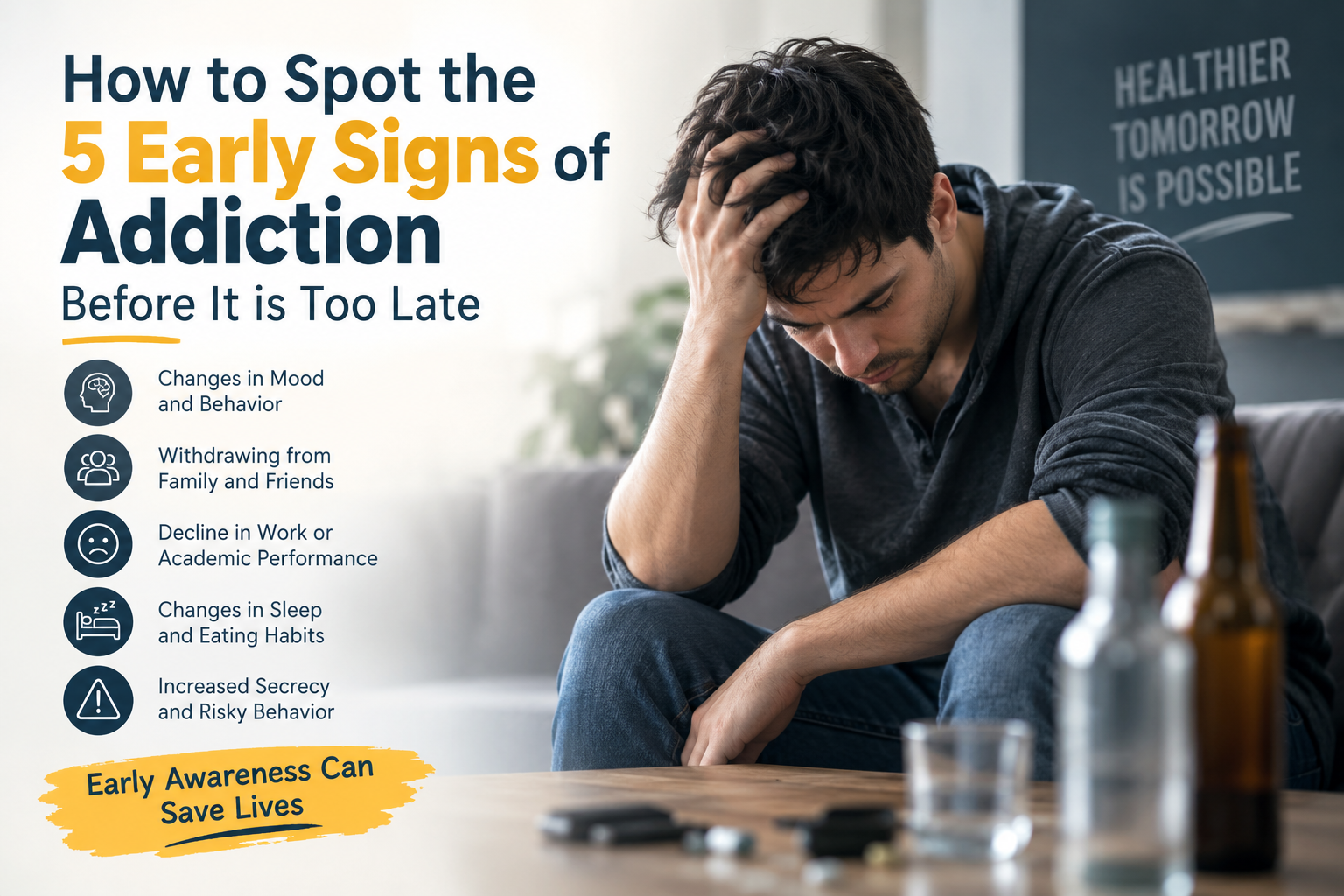
How to Spot the 5 Early Signs of Addiction Before It is Too Late


Addiction doesn’t make a sudden appearance in your life; it arrives slowly. It begins to modify behaviors, alter your routine, and hide behind simple explanations that can be made each day to disguise itself. Sometimes it is not until months later that one sees the signs of addiction but only after the fact.

Identifying drug dependency at an early stage in their formation is important. It enables you to move from a crisis situation to a manageable process of recovery before any irreversible mental or physical damage sets in. If you are concerned about someone close to you, here are five early warning signs of addiction that you cannot afford to overlook. 

  1. The Slow Development of Functional Tolerance

The most sneaky indicator of addiction in the early stage is not the point where someone becomes incapable; it’s the point where he can do things with surprising efficiency.

At the beginning stages, the human brain quickly adjusts itself to alien substances. The person who felt the impact of just one or two beverages or some prescription medicines needs to drink three, four, or even more in order to get the same feeling. This phenomenon is called tolerance. 

  • Signs: In social situations, you may find that he is drinking more in comparison to his friends, yet showing no signs of getting affected at all. He may even make jokes that he has a “hollow leg,” meaning a super-high metabolism rate, but biologically, he is adjusting himself to the substance. 
  1. Silent Shift in Priorities and Routines 

Addiction is an all-consuming problem. Even before the individual misses significant milestones or starts facing legal trouble, there will be a silent change in the structure of his daily routine, revolving around the substance. 

This process is technically termed as the narrowing of behavior range. Once-loved hobbies like participating in sport activities, painting, or evening strolls become gradually absent from his schedule. 

  • Watch out for: Changes in their social environment. There will be a gradual absence from family dinner sessions or hanging out with the old, healthy social groups and instead opting for the new social group which will either be indulged in substance abuse or will encourage him in it. 
  1. Dr. Jekyll and Mr. Hyde” Mood Swings 

Due to the chemicals artificially releasing dopamine into the brain, one’s normal emotional responses deteriorate fast. Once the chemical dissipates, a deficiency is created, causing drastic changes in a person’s personality. 

  • How to tell: Sudden, unprovoked bursts of irritability, anxiety, or defensive reactions to being questioned about any small inconvenience. A normally patient individual starts acting aggressively or becomes uncooperative while discussing their day. 
  • Secretiveness: This is accompanied by a strong desire for privacy. They will be locking their phone quickly, becoming overly defensive while having a conversation, or avoiding eye contact in order to disguise signs such as glassy or bloodshot eyes. 
  1. Subtle Biological Withdrawal (Early Signs of Withdrawal) 

Withdrawal symptoms in late stage addiction are intense but in the early stages of addiction, they can be very subtle and often confused with common stress or simple flu. 

As the body gets used to a particular substance, it will go through a period of slight discomfort when that substance is no longer present in their blood stream. 

  • Watch out for: In the mornings or in times when they haven’t been on the substance for a day or two, be attentive to bodily reactions. The usual early signs of withdrawal are: 
  • Unusual lethargy in the morning or persistent fatigue 
  • Slight trembling of hands and/or sweating 
  • Disrupted sleeping pattern (insomnia and then crashing) 
  • Constant complaints of headache, nausea or restlessness 
  1. Finances Problems and Lending Habits 

As a habit becomes an addiction, the financial toll goes up significantly. No matter how successful financially, the individual will ultimately face shortages of resources since he or she puts everything in order to obtain the drug. 

  • Warning signs: Unexplained requests to lend small amounts of money from relatives and friends based on the excuses such as “I have problems with my bank app” or “I left my wallet somewhere”. Unaccounted-for savings, missed payments even if there is a stable job and absence of expensive things from the house.Action Plan: The Way Forward 

If any of these warning signs sound familiar to you, do bear in mind that addiction is a progressive and curable illness, and not a sign of immorality. Confronting an addict in an aggressive manner only pushes him or her further into denial. Always begin the dialogue from a stance of love and discuss only the behavior that you have noticed. Visit the best Nasha Mukti Kendra in Punjab. 

FAQs 

Q1: What are the criteria for defining someone as a “functional” addict? 

A1: A functional addict manages to hold on to his employment or educational responsibilities along with substance abuse. But you will see other signs too like drastic mood changes when he is sober, drinking/using heavily off duty and isolating himself from past activities. For more update visit Ekta Hospital

Q2: What is the best way to approach someone who is showing signs of an emerging addiction problem? 

A2: When approaching them, try to be empathic and make objective comments without judging them. Try using “I” language such as “I have noticed that you are more stressed and drinking more now.” 

Q3: Is it possible to treat a case of early-stage addiction in the comfort of home? 

A3: Although behavioral and therapy-based interventions can help, it is always better to seek professional advice at Ekta Hospital, Zira because there may be hidden physical dependence that will need medical detoxification. 

5 Myths That You Were Not Aware About Alcohol

Alcohol Addiction

Alcohol addiction is kind of one of the most serious health concerns that is affecting individuals and families, right now. A lot of people tend to think that drinking alcohol is harmless, or whatever, until it starts messing with physical health, mental balance, family relationships, and also careers. But once it gets there, it can feel like everything slips at once. Going for professional guidance from a Rehab Centre in Ludhiana can help a person make sense of the real dangers behind alcohol dependence, and begin that hard but hopeful path of recovery.

Common Alcohol Myths You Need To Be Aware About

Myth 1: Alcohol Addiction Happens Only to Weak People

People kind of believe that addiction shows up mostly in folks with weak willpower. But the truth is more messy than that , alcohol addiction is a medical condition that can happen to pretty much anyone, no matter the age , education, or social standing. stress and trauma, plus genetics and mental health problems, all can play a role in alcohol dependence, so it’s not some kind of “personal flaw” thing.

Myth 2: Drinking Daily Is Necessary to Be Addicted

A lot of people assume someone is only addicted if they drink every day. Still , it’s not that simple. Binge drinking, a loss of control, and emotional reliance on alcohol are also red flags. Even if it’s not daily, the occasional heavy drinking can slowly harm the body and the mind.

Myth 3: Alcohol Helps Reduce Stress

Alcohol might feel like it calms you down for a little while. but in the longer run it can actually fuel anxiety , depression, and emotional volatility. Some people start using alcohol as a coping tool, and then that coping method turns into dependence, which tends to make mental health issues even worse over time.

Myth 4: Detox Alone Can Cure Alcohol Addiction

Detoxification is like the starter point, not the whole journey, in recovery. It’s only the first step, really. For long term healing you still need counseling, therapy, changes in daily routines, and that steady emotional backing from real people around you. At the Best De Addiction Hospital in Punjab, patients get a full approach, not just a short detox, but a complete treatment path that covers physical recovery and mental wellness for longer lasting sobriety.

Myth 5: Recovery From Alcohol Addiction Is Impossible

A lot of people say, once someone gets addicted, recovery can’t happen. But honestly that idea is off. Every year thousands of individuals manage to break free from alcohol addiction through the right medical support, therapy, and family involvement. Proper rehabilitation centres don’t only focus on stopping alcohol use, they also help patients rebuild confidence and move toward healthier, addiction-free living.

Importance of Professional Rehabilitation

Alcohol addiction messes with pretty much everything, health relationships, career, day to day life—so it’s not just one small problem, it spreads. Rehab centres usually offer a safe detoxification process, plus counseling, behavioral therapy, and relapse prevention programs, along with aftercare support. Together these approaches help people rebuild their lives and move toward full recovery , steadily.

Conclusion

Holding onto myths about alcohol addiction can quietly stall treatment and make the road back harder than it needs to be. When we learn the real truth about addiction, healing starts to become possible. If you or someone close to you is dealing with alcohol dependency, reaching out to the Best Drug De Addiction Hospital in Punjab can give you the proper professional care, and the kind of guidance that supports a healthier future.

Alcohol vs Drug Addiction: Which Is More Dangerous?

Addiction is a serious health issue that can impact every aspect of a person’s life. Whether it involves alcohol or drugs, both forms of addiction can lead to severe physical, mental, and social consequences. Many people often wonder which one is more dangerous, but the truth is that both can be equally harmful in different ways. Seeking timely help from a Rehab Centre in Ludhiana can make a significant difference in overcoming addiction and starting a healthier life.

Understanding Alcohol Addiction

Alcohol addiction, also known as alcohol use disorder, develops when a person becomes dependent on alcohol and is unable to control their drinking habits. Since alcohol is socially accepted and easily available, it is often consumed regularly, which increases the risk of addiction over time.

Excessive alcohol use can lead to serious health problems such as liver damage, heart disease, weakened immunity, and digestive issues. It also affects mental health, causing anxiety, depression, and mood swings. Long-term alcohol abuse can significantly reduce a person’s quality of life.

Understanding Drug Addiction

Drug addiction involves the misuse of substances such as opioids, cannabis, cocaine, or prescription medications. These substances directly affect brain function and can quickly lead to dependency. Compared to alcohol, many drugs have a stronger and more immediate impact on the brain, making addiction develop faster.

Drug addiction can cause severe health issues, including brain damage, respiratory problems, and increased risk of overdose. It also leads to behavioral changes such as aggression, isolation, and poor decision-making. In many cases, drug addiction can become life-threatening if not treated on time.

Key Differences Between Alcohol and Drug Addiction

While both alcohol and drug addiction are harmful, there are some differences in how they affect the body and mind. Alcohol addiction usually develops gradually and is often socially accepted, which can make it harder to identify in the early stages. Drug addiction, on the other hand, may progress more rapidly and often carries a higher risk of overdose.

Another important difference is the type of damage caused. Alcohol mainly affects the liver and other organs over time, while drugs can directly alter brain chemistry and lead to quicker psychological dependency. However, both forms of addiction can result in long-term health complications and social issues.

Which Is More Dangerous?

There is no simple answer to this question because the danger depends on the substance, usage, and individual health condition. Alcohol addiction can silently damage the body over time, while drug addiction can cause immediate and severe harm. In many cases, both can be equally dangerous and even fatal if left untreated.

The most important factor is not which addiction is worse, but how quickly it is recognized and treated. Early intervention can prevent serious complications and improve recovery outcomes.

Importance of Professional Treatment

Overcoming addiction requires more than just willpower. Professional treatment provides structured care, medical support, and counseling to help individuals recover safely. Rehabilitation centres focus on both physical detoxification and mental healing, ensuring long-term recovery.

Choosing a trusted facility like the Best Drug De Addiction Hospital in Punjab ensures access to expert care, personalized treatment plans, and continuous support throughout the recovery journey.

Conclusion

Both alcohol and drug addiction are serious conditions that can harm your health, relationships, and future. Instead of comparing which is more dangerous, it is important to understand the risks and seek help as early as possible. With the right support, guidance, and treatment, recovery is possible, leading to a healthier and more fulfilling life.