
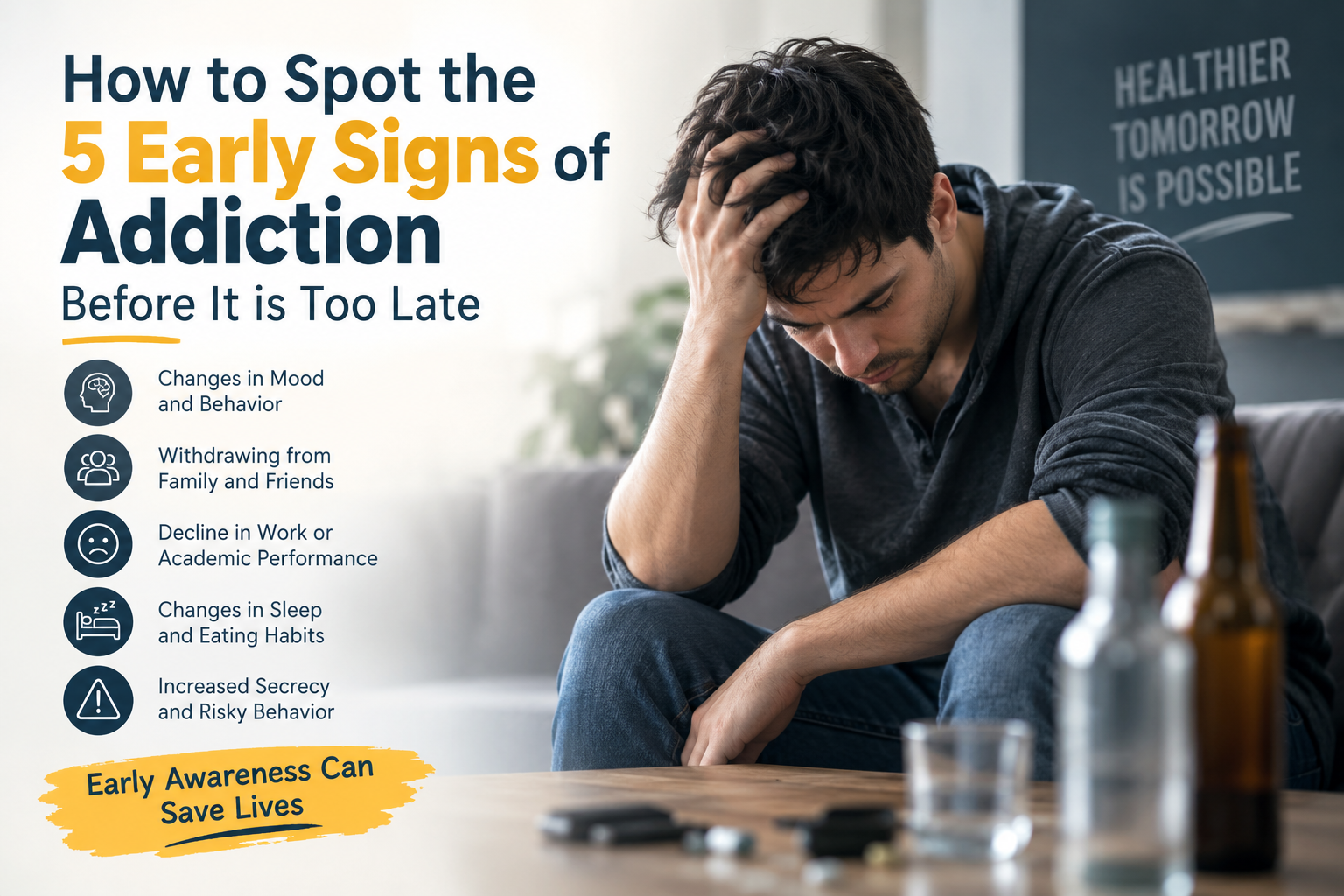

Addiction doesn’t make a sudden appearance in your life; it arrives slowly. It begins to modify behaviors, alter your routine, and hide behind simple explanations that can be made each day to disguise itself. Sometimes it is not until months later that one sees the signs of addiction but only after the fact.
Identifying drug dependency at an early stage in their formation is important. It enables you to move from a crisis situation to a manageable process of recovery before any irreversible mental or physical damage sets in. If you are concerned about someone close to you, here are five early warning signs of addiction that you cannot afford to overlook.
-
The Slow Development of Functional Tolerance
The most sneaky indicator of addiction in the early stage is not the point where someone becomes incapable; it’s the point where he can do things with surprising efficiency.
At the beginning stages, the human brain quickly adjusts itself to alien substances. The person who felt the impact of just one or two beverages or some prescription medicines needs to drink three, four, or even more in order to get the same feeling. This phenomenon is called tolerance.
- Signs: In social situations, you may find that he is drinking more in comparison to his friends, yet showing no signs of getting affected at all. He may even make jokes that he has a “hollow leg,” meaning a super-high metabolism rate, but biologically, he is adjusting himself to the substance.
-
Silent Shift in Priorities and Routines
Addiction is an all-consuming problem. Even before the individual misses significant milestones or starts facing legal trouble, there will be a silent change in the structure of his daily routine, revolving around the substance.
This process is technically termed as the narrowing of behavior range. Once-loved hobbies like participating in sport activities, painting, or evening strolls become gradually absent from his schedule.
- Watch out for: Changes in their social environment. There will be a gradual absence from family dinner sessions or hanging out with the old, healthy social groups and instead opting for the new social group which will either be indulged in substance abuse or will encourage him in it.
-
Dr. Jekyll and Mr. Hyde” Mood Swings
Due to the chemicals artificially releasing dopamine into the brain, one’s normal emotional responses deteriorate fast. Once the chemical dissipates, a deficiency is created, causing drastic changes in a person’s personality.
- How to tell: Sudden, unprovoked bursts of irritability, anxiety, or defensive reactions to being questioned about any small inconvenience. A normally patient individual starts acting aggressively or becomes uncooperative while discussing their day.
- Secretiveness: This is accompanied by a strong desire for privacy. They will be locking their phone quickly, becoming overly defensive while having a conversation, or avoiding eye contact in order to disguise signs such as glassy or bloodshot eyes.
-
Subtle Biological Withdrawal (Early Signs of Withdrawal)
Withdrawal symptoms in late stage addiction are intense but in the early stages of addiction, they can be very subtle and often confused with common stress or simple flu.
As the body gets used to a particular substance, it will go through a period of slight discomfort when that substance is no longer present in their blood stream.
- Watch out for: In the mornings or in times when they haven’t been on the substance for a day or two, be attentive to bodily reactions. The usual early signs of withdrawal are:
- Unusual lethargy in the morning or persistent fatigue
- Slight trembling of hands and/or sweating
- Disrupted sleeping pattern (insomnia and then crashing)
- Constant complaints of headache, nausea or restlessness
-
Finances Problems and Lending Habits
As a habit becomes an addiction, the financial toll goes up significantly. No matter how successful financially, the individual will ultimately face shortages of resources since he or she puts everything in order to obtain the drug.
- Warning signs: Unexplained requests to lend small amounts of money from relatives and friends based on the excuses such as “I have problems with my bank app” or “I left my wallet somewhere”. Unaccounted-for savings, missed payments even if there is a stable job and absence of expensive things from the house.Action Plan: The Way Forward
If any of these warning signs sound familiar to you, do bear in mind that addiction is a progressive and curable illness, and not a sign of immorality. Confronting an addict in an aggressive manner only pushes him or her further into denial. Always begin the dialogue from a stance of love and discuss only the behavior that you have noticed. Visit the best Nasha Mukti Kendra in Punjab.
FAQs
Q1: What are the criteria for defining someone as a “functional” addict?
A1: A functional addict manages to hold on to his employment or educational responsibilities along with substance abuse. But you will see other signs too like drastic mood changes when he is sober, drinking/using heavily off duty and isolating himself from past activities. For more update visit Ekta Hospital
Q2: What is the best way to approach someone who is showing signs of an emerging addiction problem?
A2: When approaching them, try to be empathic and make objective comments without judging them. Try using “I” language such as “I have noticed that you are more stressed and drinking more now.”
Q3: Is it possible to treat a case of early-stage addiction in the comfort of home?
A3: Although behavioral and therapy-based interventions can help, it is always better to seek professional advice at Ekta Hospital, Zira because there may be hidden physical dependence that will need medical detoxification.
